







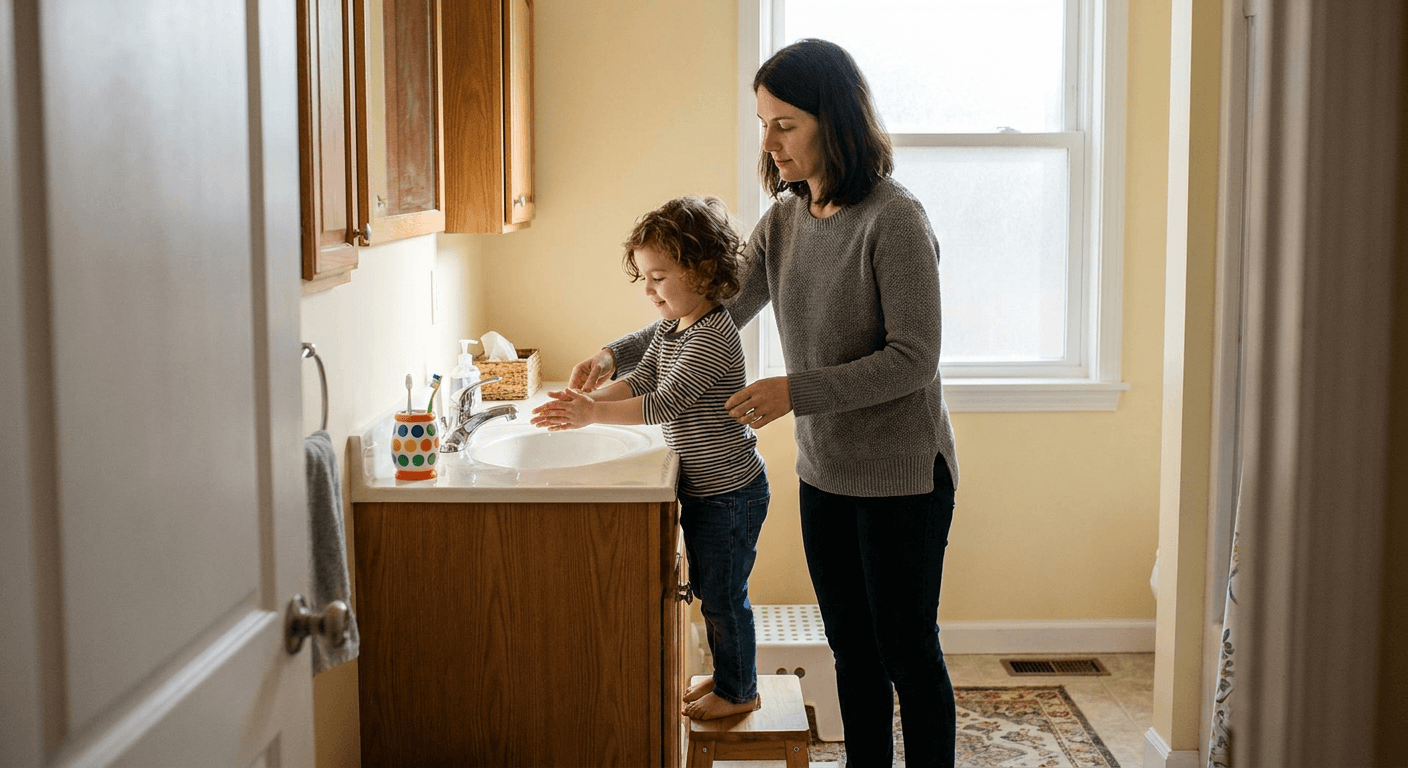
If daily routines still feel hard, it is natural to wonder whether ABA is really helping. Many parents start asking that question when getting dressed turns into a struggle, bathroom routines feel unpredictable, meals are stressful, or basic hygiene takes far more support than expected.
That question usually becomes more urgent as preschool and kindergarten get closer. Families are not always looking for perfection. They want to know whether progress is moving in the right direction and what meaningful growth actually looks like at ages 3, 4, and 5.
The clearest way to answer that is to stop thinking about self-care as one big goal. It helps more to look at the small, functional skills that make everyday life easier over time. For autistic preschoolers, those skills often fall into four routine areas: dressing, toileting, mealtime, and hygiene.
Why These Milestones Matter, and How ABA Helps Build Them
These routines matter because they shape the moments that carry the most weight in family life: getting ready in the morning, moving through preschool routines, handling transitions, and building toward more independence before kindergarten.
Progress in self-care does not always mean doing the whole routine alone. Sometimes real progress looks like tolerating more of the task, joining in without shutting down, asking for help, or completing one or two steps with lighter support. Those wins count. They are often the foundation that later independence grows from.
ABA can support that process by breaking routines into smaller steps, modeling what to do, using visuals, fading prompts gradually, reinforcing participation, adjusting the environment, and helping caregivers use the same approach across settings. The goal is not to force every child into the same timeline. It is to build steady, practical progress in the moments that matter.
Self-Care Milestones at Age 3
At age 3, the focus is usually on early participation, routine tolerance, and the first signs of independence. For many children, the biggest win is not finishing a routine alone. It is staying with the routine, copying a simple action, or showing what feels hard.
Dressing
A 3-year-old may start helping with dressing by pushing arms through sleeves, lifting feet for pants, helping pull clothing up, or tolerating clothing changes with less distress. At this stage, common barriers include sensory discomfort, transition resistance, motor planning difficulty, and trouble managing more than one step at a time.
ABA support often works best when the goal stays small and visible. That might mean teaching one step first, pairing it with a simple model or visual cue, and reinforcing participation in one or two actions. At age 3, the goal is usually not full independence with fasteners or more complex clothing. It is building comfort, predictability, and early success.
Toileting
Toileting progress at age 3 may begin with signaling discomfort, tolerating bathroom trips, sitting briefly, or joining part of the routine with support. For some children, learning how to request the bathroom or ask for help matters just as much as successful toileting itself.
This is one reason toileting can feel slow. It is not a single skill. It depends on body awareness, communication, sensory tolerance, motor planning, and routine consistency. Accidents do not automatically mean progress is not happening.
Mealtime
At this age, mealtime goals may include sitting at the table for part of the meal, accepting the routine of sitting and cleaning up, using a spoon for a few bites, or trying an open cup with help. What matters most is whether the child is becoming more able to participate in the routine.
ABA can support mealtime by targeting one small piece at a time instead of treating the whole meal as one long demand. That keeps expectations more realistic and makes progress easier to see.
Hygiene
Age 3 hygiene goals often include tolerating handwashing, wiping hands or face with help, and participating in the first steps of toothbrushing. Water, soap, towels, and toothbrushes can all bring sensory challenges, so resistance here is common.
A short visual routine, adult modeling, and gentle prompt fading can make these tasks feel more predictable. For many children, success starts with getting through one or two steps calmly.
Self-Care Milestones at Age 4
By age 4, many children are ready for more consistent participation and a little more sequence-following. Progress often shows up as doing more of the task, relying on fewer prompts, or carrying the skill across caregivers and settings.
Dressing
A 4-year-old may become more consistent with everyday clothing routines, begin working on shoes or outerwear, and follow a familiar dressing sequence with support. Visuals, backward chaining, and thoughtful setup can reduce frustration.
At this age, meaningful progress usually looks like growing consistency in familiar routines before expecting independence with every clothing task. That steady pattern matters more than checking off advanced steps too early.
Toileting
By age 4, some children can follow more of the bathroom sequence, tolerate wiping and handwashing more reliably, and communicate more clearly when they need help. The goal is not perfection in every setting. It is growing independence in more of the routine.
If progress feels stuck, it helps to step back and ask what is actually getting in the way. Toileting difficulty may reflect communication needs, sensory discomfort, or motor planning challenges, not simple refusal.
Mealtime
Self-care progress at meals may include more reliable utensil use, steadier open-cup practice, and staying engaged through more of the meal routine. This is also the stage where generalization starts to matter more.
A skill that only happens with one caregiver in one setting is still a start, but it becomes more useful when it shows up across meals, people, and routines.
Hygiene
A 4-year-old may be ready to follow a simple handwashing routine, tolerate more steps of toothbrushing, and clean hands or face with fewer prompts. Progress tends to move faster when the support fits the actual barrier.
If the child loses track of the sequence, visuals may help. If the toothbrush itself is the problem, the right next step may be shorter, more manageable practice with more sensory support.
Self-Care Milestones at Age 5
At age 5, self-care goals often connect more directly to kindergarten readiness. The question becomes less about whether a child can do part of a routine and more about whether the skill holds up during school-day transitions, bathroom routines, lunch, and the moments when an adult cannot step in right away.
Dressing
A 5-year-old may be working toward more independent dressing in everyday school-day routines, especially shoes, outerwear, and simple clothing adjustments before leaving the house or after bathroom use. Some children may also begin handling basic fastener participation.
Still, readiness is better measured by whether the routine works in real life than by whether every detail is mastered. A usable routine matters more than a perfect one.
Toileting
By age 5, many families hope for greater independence with the bathroom sequence, more reliable handwashing, and clearer communication when help is needed. School readiness does not require flawless independence in every setting.
What matters more is whether the routine is usable, familiar, and resilient. A child may still need support after a mistake or in an unfamiliar bathroom, and that does not cancel out meaningful progress.
Mealtime
Mealtime readiness at age 5 often includes using utensils and an open cup more reliably, staying with the routine, managing simple lunch tasks, and asking for help with harder-to-open items. These are the kinds of skills that make classroom participation feel more manageable.
Hygiene
At age 5, hygiene progress may include fuller participation in handwashing and toothbrushing, plus more independence with cleaning hands and face after meals or messy play. The best sign of readiness is consistency across home, school, and community settings, even if the routine does not look exactly the same every time.
The ROOTED Readiness Map
When progress feels uneven, it helps to use a simple framework for choosing the next target instead of guessing. The ROOTED Readiness Map keeps the focus on real routines and practical next steps.
Routine Anchor
Start with the self-care routine causing the most daily friction or the biggest school-readiness concern. That may be getting dressed without a long struggle, managing the bathroom routine with less stress, staying with meals, or handling basic hygiene before leaving the house.
Observable Micro-Step
Pick the next visible win inside that routine. It may be pulling pants up after toileting, tolerating handwashing through the last step, using a spoon for several bites, or finishing the first toothbrushing step without resistance.
Obstacle Lens
Ask what is actually blocking progress. Is the child struggling to request help? Is the routine sensory-heavy? Is motor planning making the steps hard to organize? Is the transition itself the hardest part? Looking at the barrier clearly helps families avoid treating every challenge like defiance.
Teaching Fit
Match the support to the obstacle. Modeling may help when a child needs a clear example. Visuals may help with sequencing. Prompt fading may help when adult cues are doing too much of the work. Reinforcement may help when a hard routine needs a stronger reason to keep going.
Everyday Transfer
The last question is whether the skill shows up where it matters. Can the child use it with another caregiver, in preschool, or out in the community? A self-care goal becomes more meaningful when it reduces dependence in real moments, not only during one ideal practice session.
Age 3 to 5 Self-Care Readiness Tracker
A simple readiness tracker can help parents and BCBAs spot the next workable step without turning development into a scorecard.
Suggested structure
Use four routine rows: Dressing, Toileting, Mealtime, and Hygiene. Then review each area across age 3, age 4, and age 5, with one final column for Current Support Needed.
For each routine, note the most relevant skill the child can already do, the next small step to target, and the type of support that helps most. Useful labels may include Needs modeling, Needs visual support, Needs prompt fading, Needs sensory accommodation, or Needs further assessment.
How families can use it
This kind of tracker can be useful before a BCBA meeting, during a quarterly review, or when comparing home routines with preschool or kindergarten expectations. Its purpose is not to grade a child. It is to help families and providers choose the next practical target that supports more independence over time.
When Progress Is Uneven
Uneven progress is common. A child may do well with meals but struggle with toileting, or manage the bathroom at home but not at school. Before concern grows, it helps to reassess the target itself.
Is the expectation realistic for the child right now? Do they understand the sequence? Can they communicate for help? Are sensory or motor demands getting in the way? Sometimes the right next move is adjusting the goal, not increasing the pressure.
At the same time, persistent difficulty with toileting, dressing, mealtime, or hygiene may call for a more coordinated plan when there is frequent distress, very limited progress over time, or barriers tied to communication, sensory regulation, or motor planning. In those cases, a calm clinical review is usually more helpful than blame. That grounded, graduation-focused approach is part of what many families look for when they want support that feels steady and rooted in real life.
FAQ
What self-care skills should autistic preschoolers be working on?
The core areas are dressing, toileting, mealtime, and hygiene. Within those routines, the right targets depend on age, current support needs, and the barrier getting in the way. Progress does not have to mean full independence to matter.
How does ABA help build self-care skills in children with autism?
ABA can make daily routines more teachable by breaking them into smaller steps, modeling what to do, using visuals, fading prompts, adjusting the environment, and reinforcing useful participation. The strongest plans match the support to the real obstacle.
What if my child is not doing the same self-care tasks as other 3-, 4-, or 5-year-olds?
It helps to look past comparison and focus on whether the current goal is realistic, whether the barrier is understood, and whether progress is showing up in participation, tolerance, communication, or sequence completion. Uneven pacing is common, but persistent barriers may still deserve a closer look.
How can I tell whether ABA is helping in everyday routines?
Look for changes you can actually observe: less distress around the routine, more participation in key steps, clearer help-seeking, more of the sequence completed, and better transfer across caregivers or settings. Those shifts usually tell you more than a single perfect day.
When should I be more concerned about delays in toileting, dressing, mealtime, or hygiene?
Concern is more warranted when there is ongoing high distress, little forward movement over time, loss of skills across settings, or barriers that clearly need more coordinated support. The goal is not to panic over every difference. It is to notice when a child may need a different kind of help to keep moving toward independence.
